
With the Supreme Court (SC) cancelling captive coal block allocations, Jindal Steel & Power Limited will be the worst-affected company.

Adani Power bagged Jitpur mine in Jharkhand.

Major corporates are staring at an uncertain future after investing substantially on their projects

Their coal block bids may be referred to CCI.

The judiciary has sent a strong message against crony capitalism.
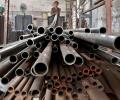
Rising prices of international coal - both coking and thermal - used in the making of ferrous and non-ferrous metals, respectively, are expected to have an impact on margins of metals companies in July-September quarter (Q2) as steel companies may see margins getting eroded, while the base firms could stand to benefit, said brokerages.

R-Power, Essar could be hit as state mulls benefit-sharing levy for ecology loss.

Many top corporate groups hit hard, in penalties and sunk investments, beside loss of future revenue
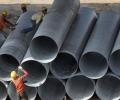
Industrial metals (ferrous and non-ferrous) suffered great volatility once the Ukraine War began in February 2022. First, there was a sharp price rise due to fears of supply disruption, followed by weak global demand. China's weakness and rolling lockdowns have hit production and demand.

Decades of a state-owned monopoly selling coal at a fixed price has taken its toll on production.
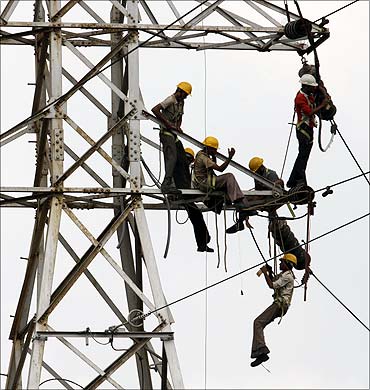
With their balance sheets under stress, private companies have lost interest in them.

Raw material prices had been on the rise, but since Russia waged war on Ukraine, prices have surged.
The imposition of 15 per cent export duty on steel has suddenly altered the prospects of the sector to negative and led to a big sell-off in steel stocks. Iron ore and pellet exports have to face duties of 45-50 per cent, which means they become uncompetitive. The Ukraine war has led to a supply crunch in global markets and pushed up prices, with Europe, in particular, looking for replacements for Ukrainian and Russian exports.

From 5G to Tesla to Covid vaccine, 10 things will shape India's future.

Non-mineral-rich states will benefit from tariff concessions.

Notwithstanding expectations of a pick-up in construction activity during a seasonally strong January-March quarter (fourth quarter) of 2022-23 (FY23), analysts are cautiously optimistic about the building material sector - encompassing paints, pipes, wood panels, tiles, metals, and cement - as volatile input costs, coupled with fears of a global slowdown, are making demand projections uncertain. Against this backdrop, analysts suggest investors stay selective and pick stocks of companies with stronger brand recall, expanding distribution network, diversified product profile, healthier balance sheet, and sustainable cash flow. "The government's various proposals under Budget 2023-24 (FY24) may lead to the building material segment growing between 8 per cent and 12 per cent for the next five years.

The 30-share Sensex ended up 142 points at 29,462 and the 50-share Nifty gained 26 points to end at 8,895.

When the world was upended by the Covid-19 pandemic, metals got its shine back. In the last two years, infrastructure spending by major economies spurred demand, energy transition and intermittent supply disruptions fuelled a scorching rally in metals after a downturn during the first Covid wave. Now, Russia's war on Ukraine is ensuring that elevated prices stay the course.

Russia's war on Ukraine has sent steel prices soaring to its highest levels in the domestic market since November 2021. But there is little cheer in the industry. That's because input costs are spiralling out of control, leaving the big boys nearly as high and dry as the small, medium and secondary steel producers. Russia and Ukraine are major providers of steel and raw materials to the world.

Ajit Mishra, vice president, research, Religare Broking, answers your queries.

Investors booked profits in range-bound trade, led by PSU, oil & gas, energy, infrastructure, telecom, realty, healthcare, bankex, FMCG, capital goods and power counters.

Elaborating on this theme, Petroleum Minister Dharmendra Pradhan pointed out that if the power sector had not been opened up through reforms initiated in 2003, India would still have been in darkness.

It is hoped that the decision of India's apex court will send a signal to politicians and their cronies from the world of business that the rule of the law does eventually prevail, says Paranjoy Guha Thakurta.

More than 10% (40 of 498 companies) have lost at least half their market value.

Bank shares were the top losers after sharp gains last week.

Few top honchos of India Inc did very well in 2014.

Select metal stocks rebounded while power stocks extended losses after SC verdict on coal block allocations.

Ajit Mishra, vice president, Research, Religare Broking, answers your stock market queries.
 © 2026 Rediff.com - Advertise with us - Disclaimer - Privacy Policy - Sitemap - Feedback - About us - Terms of use - Grievances